
A dementia routine is a consistent daily structure that helps reduce confusion, anxiety, emotional distress, and unpredictability for people living with dementia. Familiar schedules and repeated activities can improve comfort, support independence, and create a greater sense of stability for both individuals and caregivers.
Dementia changes more than memory. It changes how a person experiences surroundings, emotions, and even ordinary daily moments that once felt automatic.
A familiar kitchen may suddenly feel confusing. A simple morning task may become overwhelming. A disrupted sleep schedule can affect the entire household emotionally and physically.
For many families, routine becomes one of the most effective ways to reduce stress and create a calmer environment.
At Sagecare, we understand that routines are not about perfection. They are about helping people feel safe, grounded, and emotionally supported in everyday life.
At a Glance
● Consistent routines can reduce anxiety, confusion, agitation, and emotional overwhelm for people living with dementia.
● Familiar schedules often help support sleep, emotional regulation, and daily independence.
● Simple habits like consistent meals, activities, and bedtime routines can create stability throughout the day.
● Caregivers also benefit from predictable routines that reduce stress and improve daily caregiving flow.
● Personalized dementia care routines work best when they adapt to the individual’s preferences, comfort levels, and changing needs.
When the World Starts Feeling Unfamiliar, Routine Creates Stability
People living with dementia often struggle with short term memory, orientation, and processing changes in their environment. Even small disruptions can trigger confusion or emotional overwhelm.
A missed meal time.
A sudden schedule change.
An unfamiliar caregiver.
A noisy environment.
A rushed morning.
These moments may seem minor to others, but for someone living with dementia, they can create significant stress and disorientation.
That is why routines for dementia patients are so important. Predictability helps reduce the mental effort required to navigate daily life while familiar patterns provide reassurance.
The Alzheimer Society of Canada explains that consistent reminders and familiar routines can help reduce confusion while supporting independence for people living with dementia.
Simple consistency can help someone feel:
● More secure
● Less anxious
● Better rested
● More emotionally regulated
For many families exploring support options like Sagecare dementia homes, routine becomes one of the most meaningful parts of quality dementia support.
Calm Often Comes From Knowing What Happens Next
One of the biggest challenges faced by people living with dementia is uncertainty.
When someone cannot fully process what is happening around them, ordinary daily activities may begin to feel stressful or unpredictable. This uncertainty can contribute to:
● Agitation
● Wandering
● Emotional distress
● Resistance to care
● Sleep disruption
● Increased confusion
A structured dementia daily routine helps reduce those moments of uncertainty. Waking up at the same time each morning, eating meals consistently, listening to familiar music, or following a calming evening routine can help create emotional anchors throughout the day.
Over time, these repeated habits become comforting. Even when memory declines, emotional familiarity often remains deeply powerful.
Consistency does not remove every difficult moment, but it can reduce the frequency and intensity of emotional overwhelm.
The Smallest Habits Often Matter the Most
Many caregivers initially believe routines need to be carefully planned hour by hour. In reality, the most effective dementia routines are often built around simple, familiar habits.
Key components of daily routines may include:
● Consistent wake up and bedtime schedules
● Regular meals and hydration
● Familiar hygiene routines
● Gentle physical activity
● Quiet rest periods
● Familiar music or television programs
● Meaningful hobbies or tasks
● Calm evening wind down routines
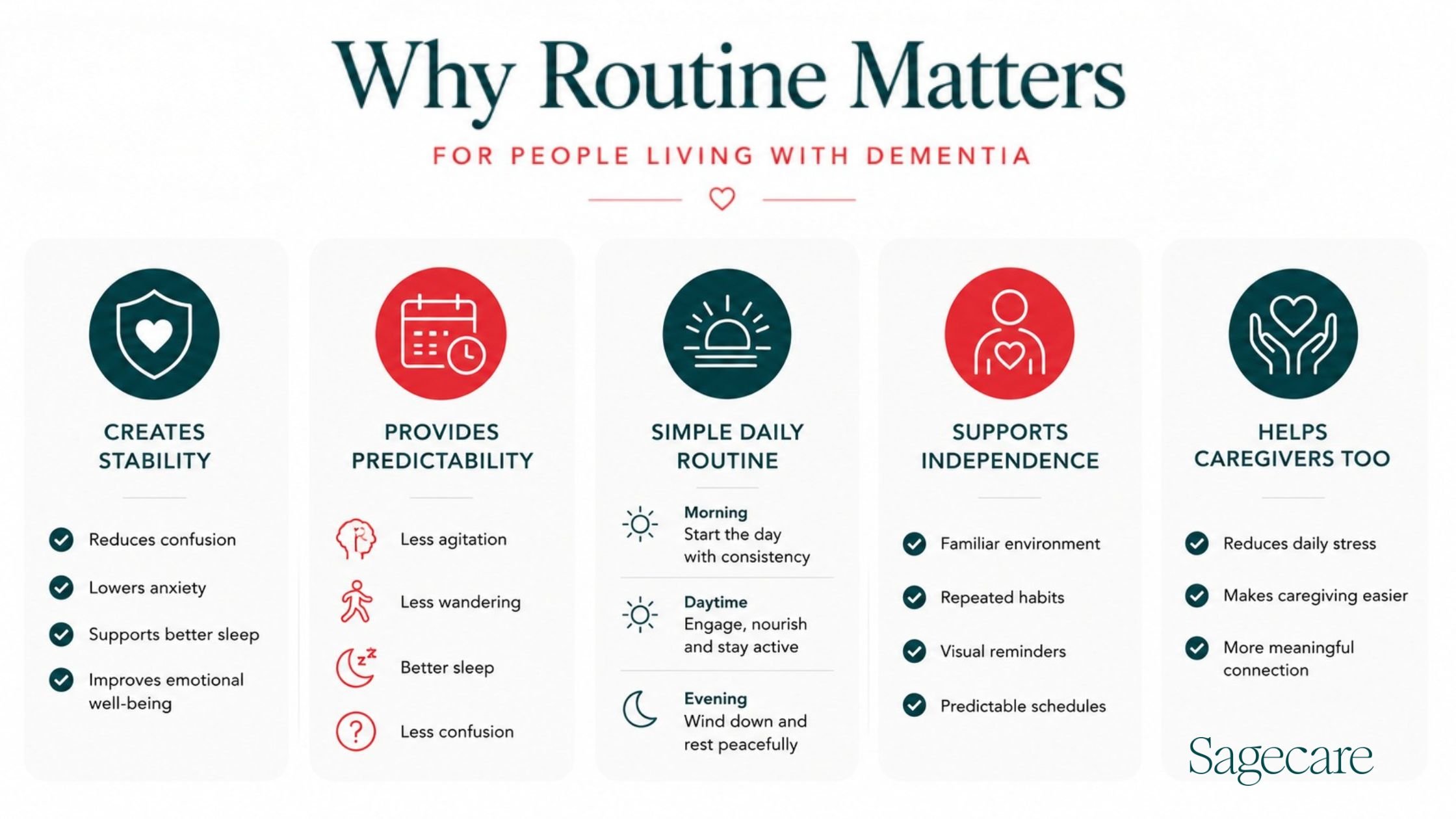
These small patterns help reinforce familiarity and reduce stress caused by unpredictability. The Alzheimer’s Association recommends building simple, consistent daily care plans that balance structure, rest, meals, and meaningful activities throughout the day.
This is also where truly personalized senior care services matter. Every person experiences dementia differently. A routine that works for one individual may feel overwhelming for another.
The goal is not to create a perfect schedule. The goal is to create a rhythm that feels familiar, comforting, and sustainable.
Independence Does Not Disappear Overnight
One of the most emotional parts of dementia for families is watching someone gradually lose confidence in activities they once handled easily.
But routine can help preserve independence longer than many people expect.
Familiarity reduces the cognitive effort required to complete tasks. Repeating activities in the same order each day helps strengthen recognition and comfort, even as memory changes progress.
For example:
● Placing clothing in the same location each morning
● Following the same breakfast routine daily
● Keeping household items organized consistently
● Using visual reminders
● Maintaining familiar walking routes
● Scheduling activities at predictable times
These habits can help individuals remain engaged in daily life while preserving dignity and confidence.
The National Institute on Aging notes that familiar environments, organized spaces, and consistent surroundings can also improve safety and reduce emotional distress at home.
At Sagecare, our approach to dementia in home care focuses heavily on maintaining familiarity and supporting independence wherever safely possible.
Caregivers Need Stability Too
Dementia caregiving is emotionally demanding. Families are constantly adjusting, monitoring behaviors, managing appointments, and trying to balance safety with compassion.
Routine helps caregivers as much as it helps the person receiving care.
According to Alzheimers.gov caregiver guidance, maintaining consistent routines for meals, bathing, sleep, and daily activities can help reduce stress for both caregivers and individuals living with dementia.
Predictable schedules can:
● Reduce daily stress
● Minimize conflict or resistance
● Improve sleep patterns within the household
● Make caregiving responsibilities more manageable
● Help identify behavioral triggers
● Create more opportunities for meaningful connection
Many families eventually realize that calmer days are often built through consistency rather than constant correction.
This is also why having access to compassionate caregivers for aging adults can make such a meaningful difference.
Life Changes, and Dementia Routines Need Flexibility Too
While consistency matters, flexibility matters too. People living with dementia may experience changing energy levels, emotional shifts, medical needs, or periods of increased confusion. Caregivers may also face unexpected disruptions, appointments, or illnesses.
Healthy dementia routines should adapt when necessary without creating additional stress.
For example:
● A shorter activity may replace a longer outing
● Rest may become more important on difficult days
● Meal schedules may need adjustment
● Seasonal changes may affect sleep and mood
● Familiar activities may need simplification over time
Families often find it helpful to learn more about managing dementia routines during changing seasons because environmental shifts can affect comfort, sleep, mood, and emotional regulation.
Support Matters More Than Families Realize
Many families try to manage dementia care entirely on their own for as long as possible. But dementia care can become emotionally and physically exhausting over time. Home care support does not replace family involvement. It strengthens it.
Professional dementia caregivers can help families:
● Maintain consistent daily schedules
● Support hygiene and meals
● Reduce caregiver burnout
● Encourage safe independence
● Create calmer environments
● Adapt routines as needs evolve
● Provide companionship and emotional reassurance
Most importantly, support allows families to spend less time constantly managing stress and more time connecting meaningfully with their loved one.
Families researching what quality dementia care truly looks like for families often discover that compassionate care is not simply about medical support. It is about helping people feel safe, respected, and emotionally supported throughout every stage of dementia.
Key Takeaways
● Consistent dementia routines can help reduce confusion, emotional distress, agitation, and anxiety by creating greater predictability throughout the day.
● Familiar daily habits like regular meals, sleep schedules, calming activities, and organized environments often support emotional comfort and independence.
● Effective dementia care routines should remain flexible and adapt to changing health needs, energy levels, and seasonal transitions over time.
● Routine benefits caregivers as well by reducing stress, improving caregiving flow, and creating calmer household dynamics.
● Compassionate dementia care is not about rigid schedules. It is about creating familiar, emotionally supportive environments that help individuals feel safe, respected, and connected.
Frequently Asked Questions
Why are routines important for people living with dementia?
Routines help reduce uncertainty and emotional overwhelm for people living with dementia. At Sagecare, we believe that familiar schedules create predictability, which can improve comfort, reduce agitation, support memory cues, and help individuals feel safer throughout the day.
What should a dementia daily routine include?
A dementia daily routine should include consistent wake up times, meals, hydration, hygiene, medication reminders, rest periods, physical activity, and calming evening habits. The most effective routines are simple, familiar, and personalized to the individual’s comfort level and abilities.
Can routines help reduce dementia related anxiety?
Yes. Structured daily routines often help reduce stress, confusion, and emotional distress by creating predictability. When someone knows what to expect throughout the day, it can lower feelings of uncertainty that may otherwise contribute to agitation or resistance to care.
How can caregivers maintain routines without being too rigid?
Healthy dementia routines should provide structure while remaining flexible enough to adapt to changing needs, moods, and energy levels. Caregivers can focus on consistency around key daily activities while adjusting timing or activities gently when necessary.
How does dementia home care support daily routines?
Professional dementia home care providers like Sagecare help families maintain consistent schedules, support familiar habits, assist with meals and hygiene, encourage independence, and reduce caregiver burnout. Personalized support can make daily life feel calmer, safer, and more manageable for everyone involved.
Familiarity Can Still Create Beautiful Moments
Dementia changes many parts of life, but comfort, connection, and emotional memory often remain incredibly powerful.
My favorite breakfast.
A familiar song.
A regular afternoon walk.
The comfort of sitting in the same chair each evening.
A caregiver who understands their rhythm.
These routines may seem small from the outside, but they can create moments of calm and recognition that genuinely improve quality of life.
At Sagecare, we believe compassionate dementia care should adapt to real life. Every individual deserves support that respects their habits, preferences, personality, and dignity while helping families feel less alone in the process.